2025 Cloud Platform Comparison: AWS vs GCP vs Azure Complete Evaluation
- Introduction: How Costly is Choosing the Wrong Platform?
- 1\. Global Cloud Market Overview
- 2024-2025 Market Data
- Why These Three?
- 2\. AWS Complete Introduction
- History and Market Position
- Core Services
- Pros and Cons Analysis
- Pricing Model
- 3\. GCP Complete Introduction
- History and Market Position
- Core Services
- Pros and Cons Analysis
- Pricing Model
- 4\. Azure Complete Introduction
- History and Market Position
- Core Services
- Pros and Cons Analysis
- Pricing Model
- 5\. Asia Pacific Platforms (Alibaba Cloud, Tencent Cloud)
- Alibaba Cloud
- Tencent Cloud
- 6\. Taiwan Local Platforms
- Chunghwa Telecom hicloud
- Far EasTone Cloud
- Need Professional Advice?
- How Can CloudSwap Help You?
- 7\. Complete Platform Comparison Table
- 8\. Platform Selection Guide
- By Enterprise Size
- By Technical Needs
- By Industry Type
- By Existing Tech Stack
- Still Can't Decide?
- 9\. Multi-Cloud Strategy Recommendations
- Why Multi-Cloud?
- Multi-Cloud Architecture Patterns
- Multi-Cloud Management Tools
- 10\. FAQ
- Q1: Which is cheapest—AWS, GCP, or Azure?
- Q2: Which should Taiwan enterprises choose?
- Q3: Already using one platform, can I switch?
- Q4: No IT team, which should I choose?
- Q5: Can I use multiple platforms simultaneously?
- Q6: Which platform has the strongest AI services?
- 11\. Conclusion
- Need Professional Advice?
- CloudSwap Can Help You:
- References
- Need Professional Cloud Advice?
Introduction: How Costly is Choosing the Wrong Platform?
💡 Key Takeaway: "We chose AWS, and the bill ended up being 3x higher than expected."
"We chose Azure because of Microsoft discounts, but we didn't even use those features."
"GCP's AI services are powerful, but no one on our team knows how to use them."
These are all real cases. Choosing the wrong cloud platform doesn't just cost more money—it can slow down your entire digital transformation.
AWS, GCP, and Azure together account for over 65% of the global cloud market. But which is best for you?
This article will help you make the right choice from perspectives of features, pricing, and pros/cons.
If you're not familiar with cloud computing basics, we recommend reading What is Cloud Computing? Complete Guide first. To understand differences between IaaS, PaaS, and SaaS service models, see Cloud Service Models Complete Comparison.
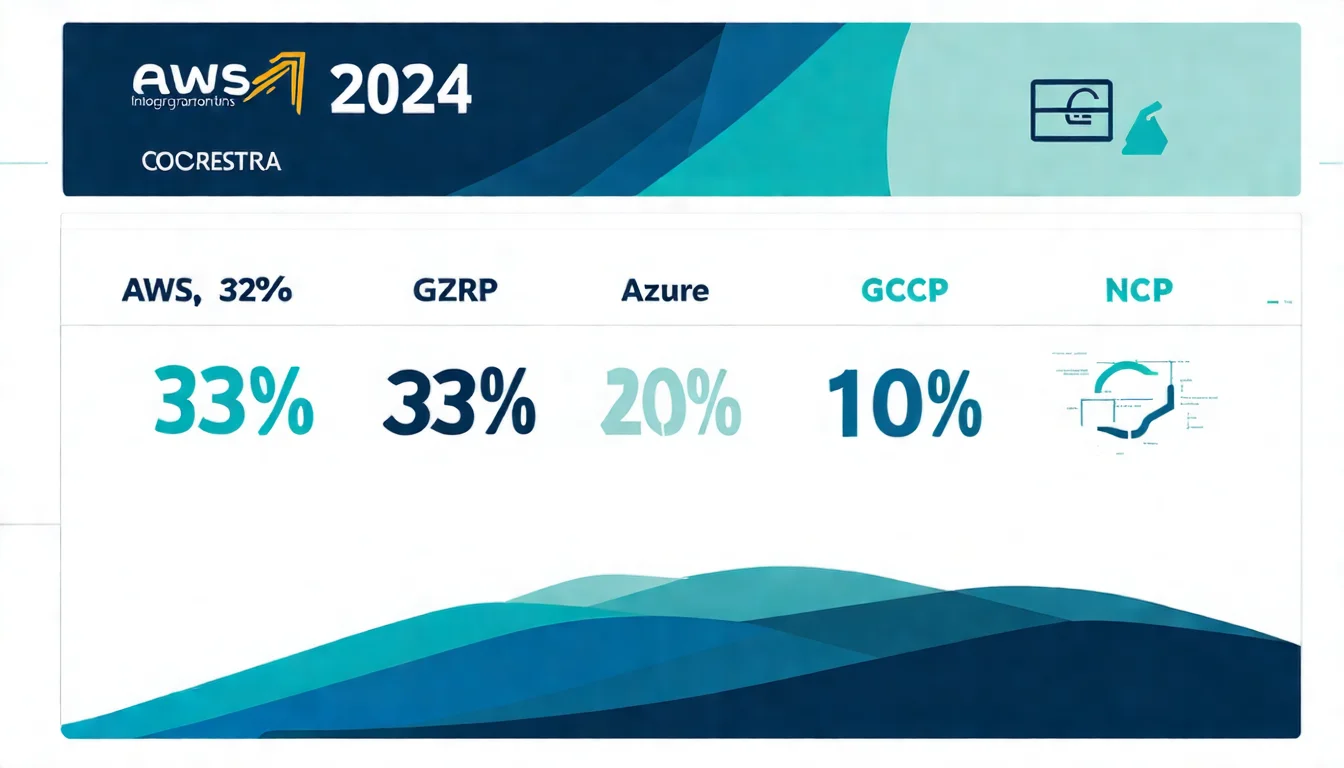 Illustration 1: Three Major Cloud Platform Market Share Pie Chart
1. Global Cloud Market Overview
2024-2025 Market Data
According to Synergy Research Group's latest report:
| Platform | Market Share | Annual Growth | Primary Market |
|---|---|---|---|
| AWS | 32% | 13% | Global Leader |
| Azure | 23% | 20% | Strong Enterprise |
| GCP | 10% | 26% | Fastest Growing |
| Alibaba Cloud | 5% | 6% | APAC Leader |
| Others | 30% | - | Fragmented |
Key trends:
- AWS remains the leader but growth is slowing
- Azure grows steadily through enterprise market
- GCP has highest growth rate, AI is main driver
- Alibaba Cloud has advantage in APAC but global expansion has slowed
Why These Three?
These three dominate the market for reasons:
AWS (Started 2006)
- First to market, most mature ecosystem
- Most complete services, almost everything you can think of
- Richest enterprise customer experience
Azure (Started 2010)
- Microsoft's enterprise relationship network
- Deep integration with Windows, Office
- Most complete hybrid cloud solutions
GCP (Started 2008)
- Google's technical foundation (Search, YouTube, Gmail)
- Leading in data analytics and AI
- Inventor of Kubernetes
2. AWS Complete Introduction
History and Market Position
AWS is the pioneer of cloud computing.
In 2006, Amazon opened its internal infrastructure to external use, launching S3 (storage) and EC2 (compute). This decision changed the entire IT industry.
Milestones:
- 2006: Launched S3, EC2
- 2009: Launched RDS (relational database)
- 2014: Launched Lambda (serverless computing)
- 2020: Annual revenue exceeded $45 billion
- 2024: Service count exceeds 200
Core Services
| Category | Service Name | Description |
|---|---|---|
| Compute | EC2 | Virtual machines |
| Compute | Lambda | Serverless functions |
| Storage | S3 | Object storage |
| Database | RDS | Relational database |
| Database | DynamoDB | NoSQL database |
| Containers | EKS | Kubernetes service |
| AI/ML | SageMaker | Machine learning platform |
| Analytics | Redshift | Data warehouse |
Pros and Cons Analysis
Pros:
- Most complete services: 200+ services, covers almost everything
- Most mature ecosystem: Most third-party tools and learning resources
- Widest global coverage: 33 regions, 105 availability zones
- Rich enterprise experience: Netflix, Airbnb, NASA are customers
Cons:
- Complex pricing: Bills are hard to understand, easy to overspend
- Steep learning curve: Too many services, beginners get lost
- No Taiwan data center: Higher latency (nearest in Tokyo, Singapore)
- Expensive support: Enterprise-level support costs extra
Pricing Model
AWS pricing is relatively complex:
| Billing Method | Description | Discount |
|---|---|---|
| On-Demand | Pay for what you use | None |
| Reserved Instances | Commit 1-3 years | 30-60% |
| Spot Instances | Bid on idle resources | Up to 90% |
| Savings Plans | Commit usage amount | 20-40% |
Money-saving tips:
- Use Spot for dev/test environments
- Use Reserved Instances for stable workloads
- Regularly review idle resources
3. GCP Complete Introduction
History and Market Position
GCP is Google's cloud platform.
Google has the world's largest network infrastructure (running Search, YouTube, Gmail), and GCP opens these capabilities to enterprises.
Milestones:
- 2008: Launched App Engine (PaaS pioneer)
- 2013: Launched Compute Engine
- 2014: Released Kubernetes (later donated to CNCF)
- 2017: Launched BigQuery ML
- 2023: Launched Vertex AI, Gemini
Core Services
| Category | Service Name | Description |
|---|---|---|
| Compute | Compute Engine | Virtual machines |
| Compute | Cloud Run | Serverless containers |
| Storage | Cloud Storage | Object storage |
| Database | Cloud SQL | Relational database |
| Database | Firestore | NoSQL database |
| Containers | GKE | Kubernetes service (strongest) |
| AI/ML | Vertex AI | Machine learning platform |
| Analytics | BigQuery | Data warehouse (industry benchmark) |
Pros and Cons Analysis
Pros:
- Strongest data analytics: BigQuery is industry benchmark
- Leading AI/ML: TensorFlow, Vertex AI, Gemini
- Most mature Kubernetes: GKE is K8s best practice
- Best network quality: Google's own fiber network
- Transparent pricing: Automatic sustained use discounts
- Has Taiwan data center: Changhua data center, low latency
Cons:
- Fewer services: About 150, less than AWS
- Less enterprise experience: Support system still growing
- Variable documentation quality: Some services lack complete docs
- Lower market share: Fewer third-party integration tools
Pricing Model
GCP pricing is relatively transparent:
| Billing Method | Description | Discount |
|---|---|---|
| On-Demand | Pay for what you use | None |
| Sustained Use Discounts | Auto discount when used beyond certain hours | Up to 30% |
| Committed Use Discounts | Commit 1-3 years | Up to 57% |
| Spot VM | Bid on idle resources | Up to 91% |
Money-saving tips:
- No special action needed, sustained use auto-discounts
- Use committed use discounts for stable workloads
- Use BigQuery Flat-rate plan to control costs
 Illustration 2: GCP Taiwan Data Center Advantage
4. Azure Complete Introduction
History and Market Position
Azure is Microsoft's cloud platform.
Microsoft has cultivated the enterprise market for decades, and Azure converts these relationships into cloud customers. Combined with deep integration with Windows Server, Office 365, and Dynamics, Azure becomes a natural choice for enterprise cloud adoption.
Milestones:
- 2010: Azure officially launched
- 2014: Renamed to Microsoft Azure, repositioned
- 2017: Became second largest cloud platform globally
- 2023: Integrated OpenAI, launched Azure OpenAI Service
- 2024: Copilot integration drives growth
Core Services
| Category | Service Name | Description |
|---|---|---|
| Compute | Virtual Machines | Virtual machines |
| Compute | Azure Functions | Serverless functions |
| Storage | Blob Storage | Object storage |
| Database | Azure SQL | Relational database |
| Database | Cosmos DB | Multi-model database |
| Containers | AKS | Kubernetes service |
| AI/ML | Azure ML | Machine learning platform |
| AI/ML | Azure OpenAI | GPT services |
Pros and Cons Analysis
Pros:
- Best Microsoft integration: Seamless integration with Windows, Office, Dynamics
- Strongest hybrid cloud: Azure Arc, Azure Stack solutions are mature
- Most compliance certifications: Suitable for finance, healthcare, government
- Complete enterprise sales: EA contracts, CSP partners
- OpenAI exclusive partnership: Native GPT-4, DALL-E integration
Cons:
- Confusing service naming: Frequent name changes, documentation lags
- Worse console experience: Complex interface, unintuitive operations
- No Taiwan data center: Nearest in Hong Kong, Japan
- Weaker open source community: Linux support improving but still behind
Pricing Model
Azure pricing is tied to Microsoft licensing:
| Billing Method | Description | Discount |
|---|---|---|
| On-Demand | Pay for what you use | None |
| Reserved Instances | Commit 1-3 years | Up to 72% |
| Spot VM | Bid on idle resources | Up to 90% |
| Azure Hybrid Benefit | Bring your own license | Up to 40% |
| EA Contract | Enterprise agreement | Significant negotiation room |
Money-saving tips:
- Have Windows Server licenses? Use Hybrid Benefit
- Large enterprises negotiate EA contracts
- Binding with M365 E5 has additional discounts
5. Asia Pacific Platforms (Alibaba Cloud, Tencent Cloud)
Alibaba Cloud
Market Position: #1 market share in APAC, absolute leader in China
Pros:
- Most complete Chinese support (docs, customer service, community)
- Many APAC nodes (Taiwan, Hong Kong, Singapore, Tokyo)
- Competitive pricing
- Suitable for enterprises with China market needs
Cons:
- Less international market experience
- Some services differ between international and China versions
- Geopolitical risks
Suitable for:
- Enterprises with China market
- SMBs needing Chinese support
- Budget-sensitive projects
Tencent Cloud
Market Position: Strong in gaming, social, video streaming
Pros:
- Rich gaming industry experience
- Mature live streaming and video services
- Competitive pricing
Cons:
- Lower internationalization
- Weaker enterprise-level services
- Variable documentation quality
Suitable for:
- Gaming companies
- Live streaming/video platforms
- Social applications
6. Taiwan Local Platforms
Chunghwa Telecom hicloud
Pros:
- Local service, Chinese customer support
- Complies with Taiwan regulations (Personal Information Protection Act, Cybersecurity Management Act)
- Integration with Chunghwa Telecom network
- Rich government tender experience
Cons:
- Limited service types
- Slower technical innovation
- Pricing not necessarily advantageous
Suitable for:
- Government agencies
- Enterprises needing data residency in Taiwan
- Traditional industries needing Chinese technical support
Far EasTone Cloud
Pros:
- Partners with AWS, provides local support
- Integration with telecom services
- Chinese customer support
Cons:
- Actually a reseller for AWS
- Pricing may be higher than direct AWS
Suitable for:
- Enterprises wanting AWS but needing local support
- Customers preferring single-window service
Need Professional Advice?
Every platform has pros and cons—choosing wrong could cost several times more.
How Can CloudSwap Help You?
- Needs assessment: Clarify your business needs and technical constraints
- Platform comparison: Objective analysis for your situation
- Cost estimation: TCO comparison across platforms
- Migration planning: Best path for cross-platform migration
Schedule free consultation and let us help you find the most suitable cloud platform.
7. Complete Platform Comparison Table
This table helps you understand the differences at a glance:
| Comparison Item | AWS | GCP | Azure | Alibaba Cloud |
|---|---|---|---|---|
| Market Share | 32% | 10% | 23% | 5% |
| Service Count | 200+ | 150+ | 200+ | 100+ |
| Global Regions | 33 | 40 | 60+ | 29 |
| Taiwan Data Center | ❌ | ✅ Changhua | ❌ | ✅ |
| AI/ML | ⭐⭐⭐⭐ | ⭐⭐⭐⭐⭐ | ⭐⭐⭐⭐ | ⭐⭐⭐ |
| Containers/K8s | ⭐⭐⭐⭐ | ⭐⭐⭐⭐⭐ | ⭐⭐⭐⭐ | ⭐⭐⭐ |
| Data Analytics | ⭐⭐⭐⭐ | ⭐⭐⭐⭐⭐ | ⭐⭐⭐⭐ | ⭐⭐⭐ |
| Hybrid Cloud | ⭐⭐⭐⭐ | ⭐⭐⭐ | ⭐⭐⭐⭐⭐ | ⭐⭐⭐ |
| Enterprise Integration | ⭐⭐⭐⭐ | ⭐⭐⭐ | ⭐⭐⭐⭐⭐ | ⭐⭐⭐ |
| Chinese Support | ⭐⭐⭐ | ⭐⭐⭐ | ⭐⭐⭐ | ⭐⭐⭐⭐⭐ |
| Pricing Transparency | ⭐⭐ | ⭐⭐⭐⭐ | ⭐⭐⭐ | ⭐⭐⭐ |
| Learning Curve | Steep | Medium | Medium | Gentle |
 Illustration 3: Four Platform Radar Chart Comparison
8. Platform Selection Guide
By Enterprise Size
| Enterprise Size | Recommended Platform | Reason |
|---|---|---|
| Startup/Small | GCP or AWS | Large free tier, pay-per-use |
| Medium Enterprise | Depends on needs | Consider existing tech stack |
| Large Enterprise | AWS or Azure | Complete services, mature enterprise support |
| Multinational | Multi-cloud strategy | Risk distribution, location-specific |
By Technical Needs
| Technical Need | Recommended Platform | Reason |
|---|---|---|
| AI/Machine Learning | GCP | Vertex AI, BigQuery ML strongest |
| Containers/Kubernetes | GCP | GKE is industry benchmark |
| Big Data Analytics | GCP | BigQuery is unmatched |
| Windows/.NET | Azure | Best native integration |
| Hybrid Cloud | Azure | Azure Arc, Stack most mature |
| IoT | AWS | IoT Core ecosystem most complete |
| Serverless | AWS | Lambda most mature |
By Industry Type
| Industry | Recommended Platform | Reason |
|---|---|---|
| Finance | Azure or AWS | Most compliance certifications |
| Healthcare | Azure or GCP | HIPAA compliance, AI diagnostics |
| Retail E-commerce | AWS | Most experience (Amazon itself) |
| Gaming | AWS or GCP | Global deployment, low latency |
| Manufacturing | Azure or AWS | IoT, edge computing |
| Media/Video | GCP | YouTube technology foundation |
By Existing Tech Stack
| Existing Tech | Recommended Platform | Reason |
|---|---|---|
| Windows Server | Azure | Hybrid Benefit saves money |
| Oracle | AWS or OCI | Easier license transfer |
| SAP | Azure or AWS | Most certified solutions |
| Google Workspace | GCP | Account integration |
| Kubernetes | GCP | GKE best practices |
Want to see real application cases for each platform? See Cloud Computing Case Studies: 10 Enterprise Digital Transformation Success Examples.
Still Can't Decide?
Schedule free consultation and let experts advise based on your specific situation.
We'll evaluate:
- Your business needs and growth plans
- Existing tech stack and team capabilities
- Budget and cost considerations
- Compliance and security requirements
Then give you an objective, neutral recommendation.
9. Multi-Cloud Strategy Recommendations
More and more enterprises are using more than one cloud platform.
Why Multi-Cloud?
Pros:
- Avoid vendor lock-in: Not tied to a single platform
- Best feature combinations: Use GCP's BigQuery, AWS's Lambda
- Risk distribution: If one platform has issues, not everything goes down
- Negotiating leverage: Comparison gives pricing power
Cons:
- Increased complexity: Need to manage multiple platforms
- Higher skill requirements: Team needs multiple technologies
- Integration challenges: Data sync, identity verification
- Potentially higher costs: Can't concentrate for bulk discounts
Multi-Cloud Architecture Patterns
Pattern 1: Primary Platform + Specific Services
- Main workloads on AWS
- Data analytics using GCP BigQuery
- Keep it simple, only cross-cloud when necessary
Pattern 2: By Region
- Taiwan uses GCP (has local data center)
- China market uses Alibaba Cloud
- Americas/Europe uses AWS
Pattern 3: By Application Type
- Core systems use Azure (SAP integration)
- Innovation projects use GCP (AI/ML)
- Static websites use AWS (S3 + CloudFront)
Multi-Cloud Management Tools
| Tool | Description |
|---|---|
| Terraform | Cross-cloud infrastructure as code |
| Kubernetes | Cross-cloud container orchestration |
| Pulumi | Manage cloud with programming languages |
| CloudHealth | Multi-cloud cost management |
10. FAQ
Q1: Which is cheapest—AWS, GCP, or Azure?
No standard answer. Depends on what services and how much you use. When choosing platforms, also consider cloud security compliance requirements. Generally:
- Compute: GCP sustained use discounts are more economical
- Storage: All similar
- Data transfer: GCP is cheaper
- Overall: Need actual calculations to compare
Q2: Which should Taiwan enterprises choose?
If latency is important (like online games, real-time applications), prioritize GCP (has Changhua data center) or Alibaba Cloud. If latency isn't critical, all three major platforms work.
Q3: Already using one platform, can I switch?
Yes, but there's cost. Consider:
- Time and cost of data migration
- Work to modify applications
- Team learning time for new platform
- Recommend consulting professionals for evaluation
Q4: No IT team, which should I choose?
Recommend starting with Managed Services to reduce operations burden. Or consider finding an MSP (Managed Service Provider) to help manage.
Q5: Can I use multiple platforms simultaneously?
Yes, this is called "multi-cloud strategy." But note increased complexity. Recommend focusing on one platform first, then considering multi-cloud after familiarity.
Q6: Which platform has the strongest AI services?
Currently GCP's native AI services (Vertex AI, Gemini) lead. But Azure has exclusive OpenAI partnership (GPT-4, DALL-E). AWS's SageMaker has complete features but steeper learning curve.
11. Conclusion
Final summary of each platform's positioning:
AWS: Most complete features, most mature ecosystem, enterprise first choice GCP: Strongest AI/data analytics, transparent pricing, has Taiwan data center Azure: Best Microsoft integration, strongest hybrid cloud, most compliance certifications Alibaba Cloud: Best Chinese support, strong in APAC, suitable for China market
Selection Recommendations:
- Uncertain? Start with GCP (large free tier, transparent pricing, Taiwan data center)
- Using Microsoft technology? Choose Azure
- Need most options? Choose AWS
- Doing China market? Choose Alibaba Cloud
Remember: There's no best platform, only the platform that's best for you.
Want to understand each platform's investment value? See 2025 Cloud Computing Stocks: Taiwan and US Investment Target Analysis.
Need Professional Advice?
Cloud platform selection involves technology, cost, team, compliance, and many other aspects.
CloudSwap Can Help You:
- Current state diagnosis: Evaluate your current IT architecture and needs
- Platform evaluation: Objective comparison of AWS, GCP, Azure, Alibaba Cloud
- Cost analysis: TCO (Total Cost of Ownership) calculation for each platform
- Migration planning: Create the most suitable cloud migration path
- Multi-cloud strategy: How to effectively use multiple cloud platforms
Schedule free consultation and let us help you make the right choice.
References
- Synergy Research Group, "Q3 2024 Cloud Market Share Report"
- Gartner, "Magic Quadrant for Cloud Infrastructure and Platform Services" (2024)
- AWS, "Global Infrastructure"
- Google Cloud, "Cloud Locations"
- Microsoft Azure, "Azure Geographies"
- Flexera, "2024 State of the Cloud Report"
Need Professional Cloud Advice?
Whether you're evaluating cloud platforms, optimizing existing architecture, or looking for cost-saving solutions, we can help